



Lake of the Woods, Minnesota — Updated for 2026
From the spring walleye run on the Rainy River through the legendary fall shiner migration, open water fishing at Lake of the Woods delivers world-class action across three unforgettable seasons. Charter boats and professional guides available April through November.
Open Water Fishing in Minnesota
Lake of the Woods is the Walleye Capital of the World® — and that title is backed by numbers no other Minnesota lake can match. With millions of walleyes roaming over a million acres of water, three distinct fishing areas, and an open water season that runs from late March through November, Lake of the Woods delivers more consistent open water fishing than any other destination in Minnesota or the upper Midwest.
Other Midwestern bodies of water experience a summer slowdown due to an explosion of baitfish populations, weed growth and boat traffic. But Lake of the Woods keeps producing thanks to low weed growth, the presence of millions upon millions of walleyes, and max depths that keep the fish reachable even on the hottest days. Moreover, its naturally stained water keeps walleyes feeding throughout the day — not just at dawn and dusk like clear-water lakes. Its massive size means walleye schools aren’t pressured out. And its three completely different fishing environments mean there is always somewhere productive to fish regardless of wind, season, or what species you’re chasing.
Whether you’re comparing it to other northern Minnesota lakes or anywhere in the upper Midwest — nowhere in the region offers the combination of walleye abundance, trophy potential, multi-species variety, full-service resort infrastructure, and season length that Lake of the Woods delivers. This is Minnesota open water fishing at its absolute best.
Each area fishes differently and offers a unique experience, and each area is full of trophy fish. Many anglers explore all three on a single trip.

South Shore
The main walleye factory. 30 miles north-south by 25 miles east-west, maximum depth 38 feet. Thousands of walleyes and saugers spread across deep mud flats in summer. Most resorts, most charters, most access. The go-to for first-timers and families.

Northwest Angle
The northernmost point of the contiguous U.S. Endless structure — reefs, rocky points, protected bays, and island channels. Prime muskie water in summer. Big crappies, smallmouth bass, and excellent walleye fishing among the islands. Remote, wild, unforgettable.

Rainy River
The international border between Minnesota and Canada. 42 navigable miles from Wheeler’s Point to Birchdale. Spectacular spring walleye run and fall shiner migration. Also holds sturgeon, smallmouth bass, pike, and crappie all season. Calm, scenic, and productive even on big-lake wind days.
Season by Season
Every season on Lake of the Woods delivers a distinct fishing experience. The spring walleye run on the Rainy River, the deep-water summer bite across Big Traverse Bay, the multi-species NW Angle fall season, and the legendary fall shiner run — each one worth a dedicated trip.
Spring
Late March → Mid-May
The Rainy River near Birchdale opens in the third week of March — weeks before the lake breaks up. Walleye fishing opens catch-and-release through April 14, then transitions to the harvest season. Sturgeon are also active in the Rainy River through April 23 catch-and-release.
Early Summer
May → June
Early summer walleyes and saugers spread across mud flats in Big Traverse Bay. The go-to technique: anchor over active schools and jig with a minnow. Sorting through mixed bags including fish of all sizes — from hand-size to trophies over 28″ — is a great sign of a healthy fishery.
Mid-Late Summer
July → August
As water temperatures peak, walleyes push to deep mud — 18 to 35 feet — over the vast flats of Big Traverse Bay. Spinner rigs and crankbaits with depth-control systems (bottom bouncers, leadcore, three-way rigs) take over. The lake’s size works in your favor — there is no shortage of water to cover.
Fall
September → Freeze-up
Arguably the best fishing of the year. Emerald shiners migrate from Lake of the Woods up the Rainy River each fall — walleyes follow in massive numbers. On the lake, fish school heavily on the south shore and NW Angle islands. Charter boats run through October, some into November.
When to Come
Lake of the Woods open water season runs from late March through November. Each month brings its own patterns, techniques, and opportunities — and there’s always a productive bite somewhere on the lake.
Late March — April 14
When most of Minnesota is still ice-locked, the Rainy River opens and walleyes stack in for the spawn. Big numbers of fish including true trophy walleyes are possible. Catch-and-release through April 14 on the river and Four Mile Bay.
Jig with frozen emerald shiners, drift with fatheads, or troll crankbaits against the current. Northern pike season never closes. Sturgeon catch-and-release is active through April 23.
May
The Minnesota walleye opener (second Saturday in May) kicks off the main lake season. Fish are still relatively shallow and highly active. Walleyes are staged near shorelines, rocky points, and shallow structure throughout Big Traverse Bay.
Jigging with a frozen emerald shiner is the go-to technique. Gold, glow-white, pink, orange, and chartreuse jig colors dominate. Anchor or spot-lock over structure and work vertically. Fan-cast shorelines to locate active fish.
June
As water temperatures warm, walleyes begin sliding out to the deeper mud basins of Big Traverse Bay. Jigging remains effective early in the month, but many anglers start switching to spinner rigs with nightcrawlers as fish spread over the flats.
Northern pike intensify their feeding on weed lines. Crankbaits, spoons, and spinner baits all produce. The Rainy River holds good numbers of walleyes, bass, pike, and sturgeon all summer — a scenic and often less crowded alternative on windy days.
July — August
Thousands of walleyes slide out to the mud basins of Big Traverse Bay in 30–36 feet of water. Spinner rigs with nightcrawlers are the dominant technique — slow troll at 1.0–1.5 mph, bottom bouncer to control depth, and let the blade’s flash and vibration do the work.
Trolling crankbaits with leadcore line, bottom bouncers, or three-way rigs gets lures down to deeper fish. Muskie action heats up at the NW Angle in July and August as muskies target tulibees. Charter boats running daily from all three areas.
September — October
Arguably the best fishing of the year. Millions of emerald shiners migrate up the Rainy River and walleyes follow in massive numbers — including some of the largest walleyes of the season. Fish feed aggressively to prepare for winter.
Jigging and trolling near the Rainy River mouth and along shoreline structure produce big fish. The NW Angle muskie bite continues through October. Sturgeon harvest season opens July 1 through September 30.
November
Open water fishing continues into November as the lake resists freezing. Guides run through late fall chasing the shiner run on the Rainy River. The Rainy River remains a strong option as long as water temperatures allow.
Pike season never closes — late fall pike fishing in cold water is exceptional. As ice begins forming in back bays, the transition to ice fishing season begins.
The LOW Advantage
Action All Summer
Of Stained Water
No. 1 Color
Why Lake of the Woods Outfishes Clear-Water Lakes
On clear-water lakes across Minnesota, walleyes become light-sensitive in summer — they go deep, they stop biting midday, and fishing windows shrink. That’s the summer lull that plagues Mille Lacs, Leech Lake, and most other top walleye destinations. Lake of the Woods doesn’t have that problem.
Lake of the Woods’ naturally stained water — clean but tinted from the surrounding boreal watershed — limits sunlight penetration enough that walleyes feed actively all day, every day, from May through November. Morning, noon, afternoon: the bite is on. That’s why angling hours at Lake of the Woods are measured in millions per season.
What You'll Catch
Tap any species to learn more about it — seasons, sizes, techniques, and where to find it on Lake of the Woods.
Primary Target
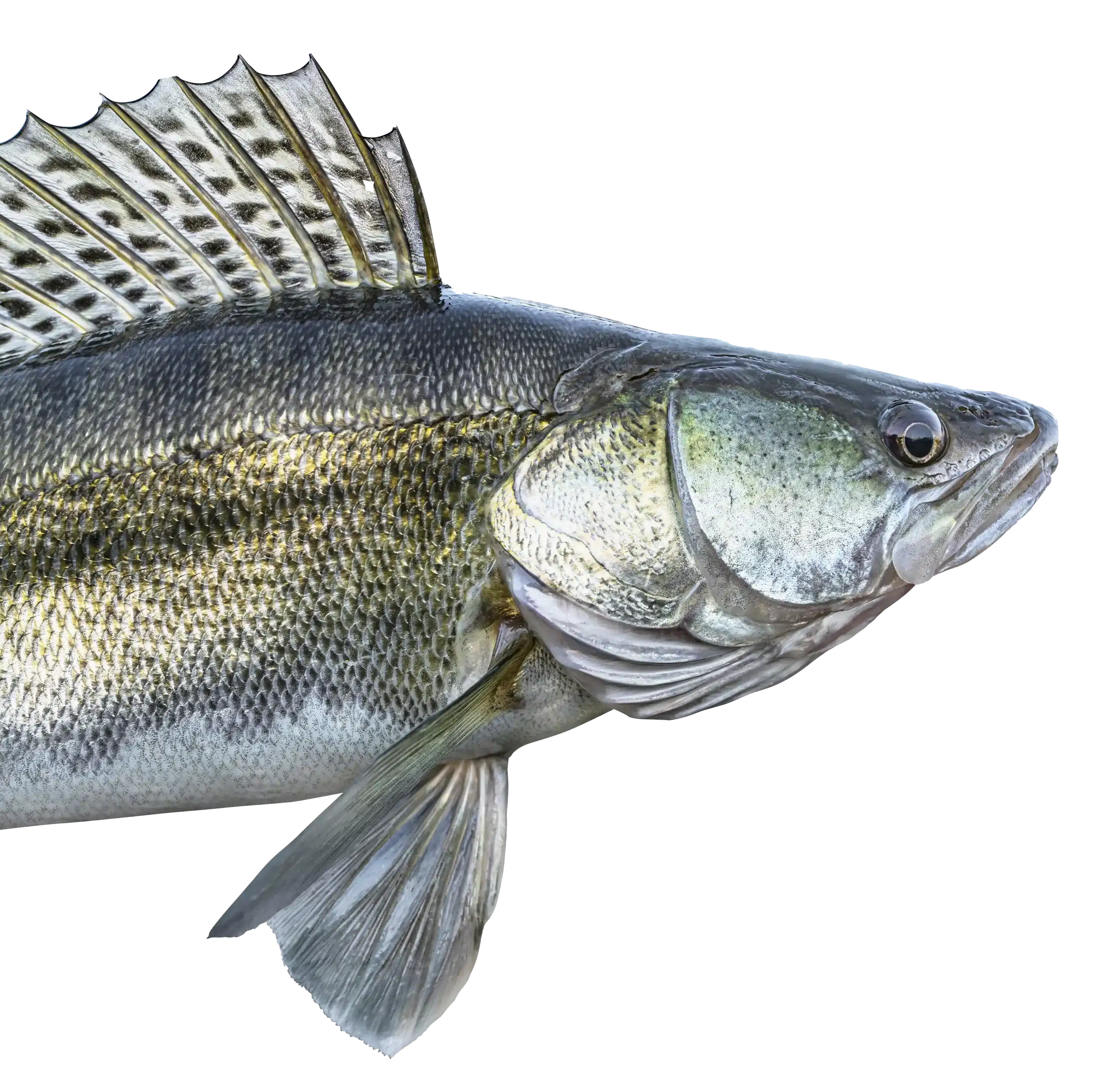
Millions of walleyes roam Lake of the Woods year-round. The signature species that defines Lake of the Woods’ reputation as the Walleye Capital of the World®. No other lake in Minnesota matches the combination of fish density, trophy potential, and season length available here.
The most sought-after fish on the lake and the primary reason millions of angling hours are logged here every year.
Tap to close ↑
Walleye’s overlooked cousin — plentiful, hard-fighting, and excellent table fare.
Often caught alongside walleye. Lake of the Woods has one of the strongest sauger populations in the upper Midwest.
Tap to close ↑
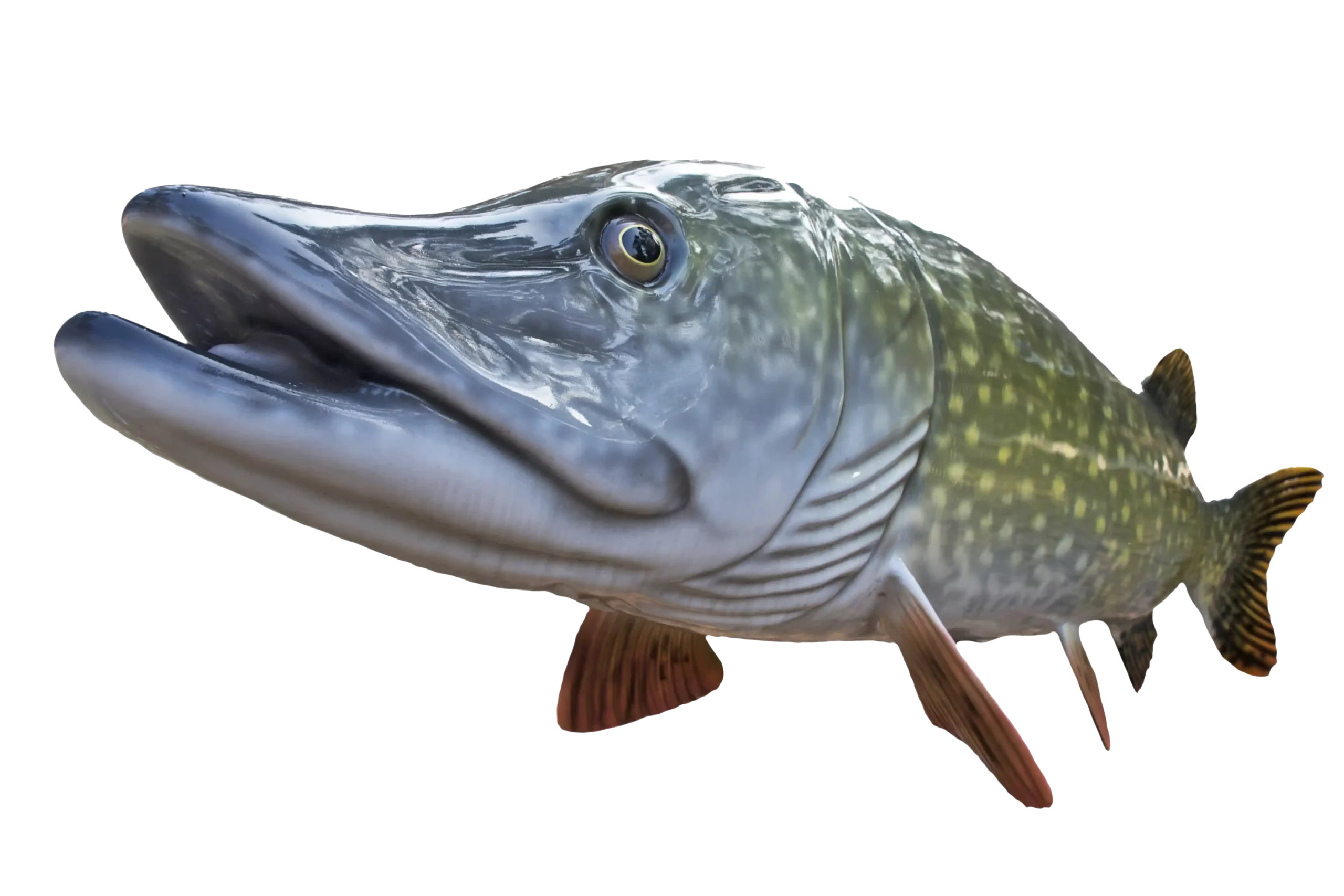
Season never closes. Aggressive, powerful, and available year-round in weed lines and shallow bays.
Pike season never closes at Lake of the Woods. Trophy pike over 40″ are present throughout the lake.
Tap to close ↑
The fish of 10,000 casts — primarily at the NW Angle where tulibees concentrate.
Lake of the Woods muskies are primarily a NW Angle fishery, targeting tulibees in July and August.
Tap to close ↑
Scrappy and hard-fighting throughout the Rainy River and NW Angle rocky structure.
Plentiful in the Rainy River and NW Angle. They fight hard and hit a wide variety of presentations.
Tap to close ↑
Big crappies at the NW Angle. Limit 10 — open year-round.
Large crappies are a NW Angle specialty. Open year-round.
Tap to close ↑
Jumbo perch throughout the lake. Excellent mixed-bag catch alongside walleye.
Abundant in the same areas as walleyes. Great eating fish.
Tap to close ↑
Prehistoric giants up to 100+ lbs. Over 100,000 in the Rainy River system. A bucket-list catch.
One of the strongest sturgeon populations in North America. Can exceed 100 lbs and 80″ in length.
Tap to close ↑
Minnesota’s only freshwater cod — abundant, hard-fighting, surprisingly delicious. No limit.
The only freshwater cod family member — and Lake of the Woods has them in extraordinary numbers.
Tap to close ↑
A September Tradition
Each fall, as days grow shorter and water cools, emerald shiners migrate from Lake of the Woods up the Rainy River. Schools of walleyes follow right behind — setting up one of the most concentrated and productive walleye bites anywhere in North America.
The timing varies by year — typically beginning mid-September and running through freeze-up. The Rainy River offers 42 miles of navigable water with eight public boat ramps, making access easy from Wheeler’s Point to Birchdale.

Navigable Rainy River
Public Boat Ramps
Typical Run Start
Guides Running Through
Best Way to Fish
Lake of the Woods is a massive, complex body of water — over a million acres stretching across the Minnesota-Ontario border, dotted with thousands of islands, bays, reefs, and channels. An abundance of professional guides and charter captains dedicate their careers to knowing exactly where the walleyes are today, at what depth, and what presentation is triggering bites. That knowledge is simply not available to someone arriving cold.

Charter & Guided Fishing
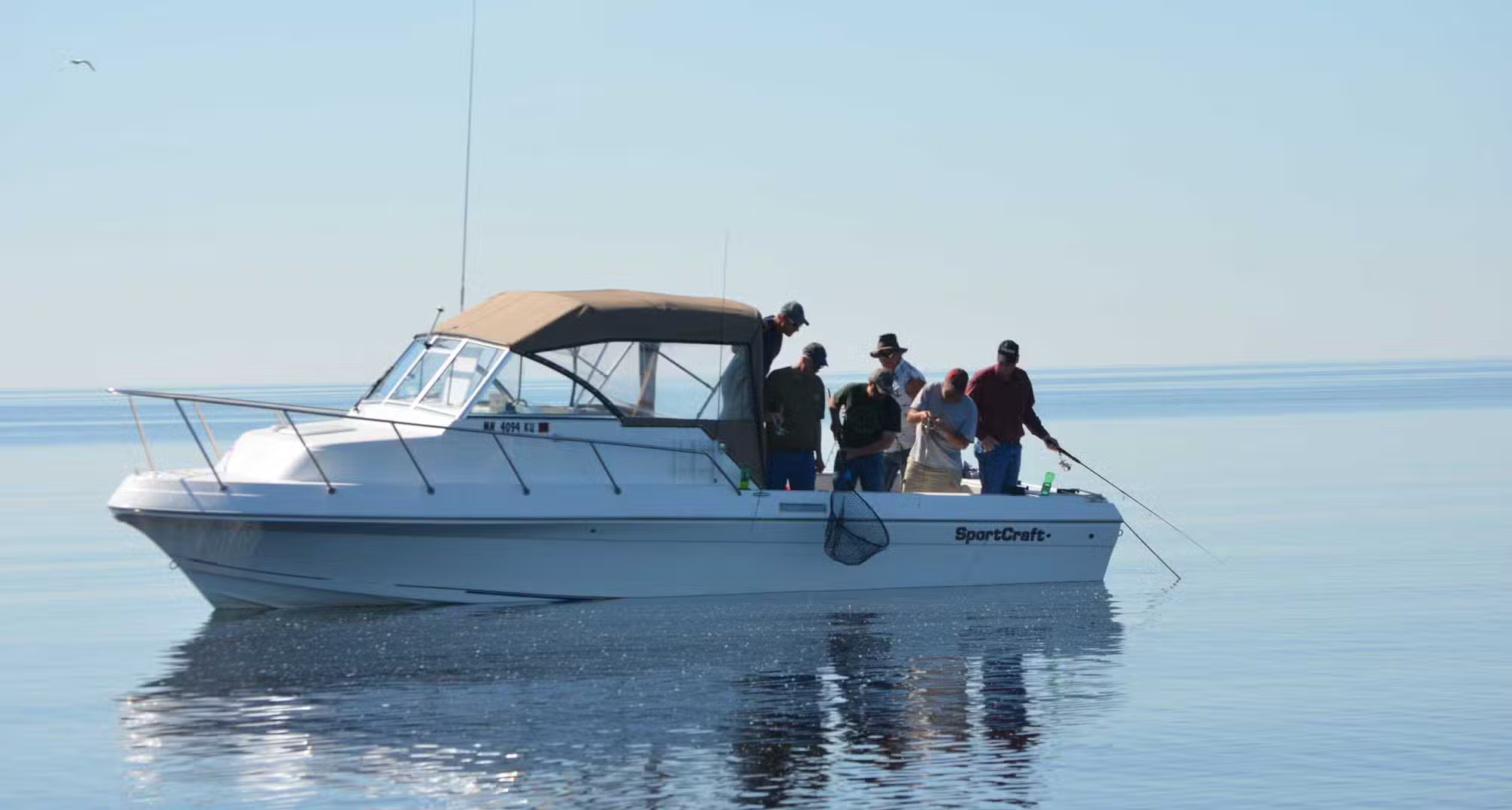
Step aboard a licensed charter boat and everything is handled — rods, reels, bait, tackle, local knowledge, navigation, and fish cleaning at the end of the day. Charter boats on Lake of the Woods are purpose-built for big water, hold up to six anglers, and operate with Coast Guard-licensed captains.
Experienced anglers with their own boats have unlimited water to explore. Eight public boat ramps along the Rainy River, multiple launches on the south shore, and fly-in access to the NW Angle.
Many resorts offer boat rentals to guests. A good option for experienced anglers who know walleye patterns but want to explore without trailering their own rig.
Updated weekly — where fish are holding, what’s working now.
Real-time conditions on the lake from multiple locations.
GPS-ready lake map.
All public launch sites on Lake of the Woods and the Rainy River.
Find a licensed charter captain.
Common questions about seasons, techniques, and planning.
Have Questions?
Seasons, techniques, regulations, charter boats, species, and everything else.
How to Catch More Fish
The guides know exactly what’s working when you arrive. Understanding the season’s dominant presentation helps you fish more confidently.

Summer
When summer heat pushes walleyes deep across the mud flats of Big Traverse Bay, crankbaits become the go-to. Tens of thousands of walleyes spread across open water with few defined spots — crankbaits let you cover water efficiently and find where fish are holding today.

Summer Peak
The signature summer technique on Big Traverse Bay. Troll slowly at 1.0–1.5 mph over deep mud flats in 18–35 feet. Gold and pink blades lead; chartreuse and orange are strong alternatives.
All Season
A licensed charter captain knows where the fish are today — not last week. From gear and bait to fish cleaning, everything is handled. Charter boats hold up to six anglers and run all season from May through October.
Go Deeper
TV episodes, guide accounts, and tournament footage that show what fishing Lake of the Woods really looks like.

Featured Video
Tom Boley chases a trophy walleye on Lake of the Woods. Real fishing, real conditions.
From the Lake to the Table
There is a reason the walleye fish fry is one of the most beloved traditions at Lake of the Woods. Caught that morning, cleaned at the resort, and fried to golden perfection the same evening. Many resorts take pride in their time-tested batters, seasonings, and tartar sauce recipes developed over decades of serving anglers.
Whether you cook in your own cabin or let the resort kitchen handle it, a walleye dinner at Lake of the Woods is the natural end to a day on the water.
Charter boats, professional guides, and 50+ resorts are ready to put you on fish from April through November. Submit one request and every qualified resort responds.