Tom Boley’s Hunt for the One on Lake of the Woods

Tom Boley_30.25 inch walleye_Lake of the Woods MN
Youtube video

If you love walleye fishing, chances are you’ve heard of Tom Boley. Tom has become one of the most recognized educators in the fishing world, with a huge following on YouTube. His channel is loaded with videos that teach anglers how to become better walleye fishermen. But what really draws people in is Tom’s passion and energy, along with his love for chasing big fish.

One of Tom’s most popular video series is called “A Hunt for the One.” In this series, he travels to some of the best walleye lakes around the Midwest, searching for what he calls “the One.” For Tom, the One is that trophy walleye every angler dreams of — a fish that hits the magical 30-inch mark.

Recently, Tom set his sights on Lake of the Woods, which is known far and wide as The Walleye Capital of the World. This massive lake straddling the U.S. and Canada is famous for its healthy walleye population, incredible scenery, and the chance to catch the fish of a lifetime.

Lake of the Woods: The Perfect Place for Giants

In Tom’s own words from his video description: “This place is the walleyes capital of the world and it lives up to its name. The fishing is off the charts for big fish.” Lake of the Woods is a unique fishery. With its endless structure, mud flats, rock piles, and countless islands, it offers the perfect habitat for walleyes to thrive and grow big.

During his adventure on Lake of the Woods, Tom does exactly what he’s become famous for. He breaks down the process of finding and catching big walleyes, sharing the little details that make all the difference. Whether it’s choosing the right jig, dialing in boat speed, or understanding how fish relate to structure during different times of the year, Tom’s videos are like a walleye class on the water.

Landing a True Minnesota Giant

Of course, Tom wasn’t just on Lake of the Woods for an average day of fishing. He was on the hunt for the One. And if you’ve watched the video, you know he found it! In true Boley style, he hooked into a massive walleye — a true Minnesota giant. The excitement in his voice and the look on his face say it all. For Tom, it’s not just about numbers of fish (though Lake of the Woods delivers plenty of those). It’s about that one special catch that you remember forever.

Tom’s video is more than just entertainment. It captures why anglers from all over the country travel to Lake of the Woods every year. The thrill of never knowing when the next bite could be the biggest walleye of your life keeps people coming back again and again.

A Great Resource for Any Angler

One of the best things about following Tom Boley is that he’s not just showing off big fish — he’s teaching you how to catch them too. Watching his Lake of the Woods adventure will give you ideas on techniques, locations, and presentations that work on this incredible fishery. Whether you’re brand new to walleye fishing or have been chasing them for decades, there’s always something to pick up from Tom’s experience.

Plan Your Own Hunt for the One

Tom Boley’s Lake of the Woods video is a perfect reminder of why this area is so special. It’s a place where you can catch plenty of eaters for a shore lunch or fish fry, but also where any given cast might hook into the biggest walleye of your life.

If you’re feeling inspired to start your own Hunt for the One, there’s no better place to do it than Lake of the Woods. Resorts and guides around the area are ready to help you make it happen, whether it’s your first trip or your fiftieth.

Be sure to check out Tom Boley’s full video right here on this page, and start planning your own adventure to the Walleye Capital of the World. Who knows — maybe the next “One” will have your name on it. For more trip planning info, visit LakeoftheWoodsMN.com.

Open Water Fishing on Lake of the Woods & the Rainy River (Summer & Fall): FAQs

Open water fishing on Lake of the Woods and the Rainy River offers some of the most consistent and rewarding fishing in North America. From late spring through fall, anglers experience everything from easy, action-packed summer fishing to trophy opportunities in the fall.

Whether you’re fishing the expansive waters of Big Traverse Bay, the scenic Rainy River, or the island-rich Northwest Angle, this is a destination where both beginners and experienced anglers can succeed. With full-service resorts, experienced guides, and millions of fish, planning your trip is easier than you might think.

Open water fishing refers to the season when the lake is free of ice, typically from May through October. This includes both summer fishing and fall fishing, each offering different patterns, techniques, and opportunities for anglers.

Lake of the Woods is known for its abundant walleye population, consistent fishing success, and ability to produce quality fish throughout the open water season. Anglers regularly catch walleyes in high numbers, along with trophy-class fish, making it one of the most reliable walleye fisheries anywhere.

Fishing is excellent throughout the entire open water season:

  • Early Summer (May–June): Walleyes are often shallower and very active.
  • Mid-Summer (July–August): Fish spread out, often over deeper mud basins and structure.
  • Fall (September–October): Big walleyes feed aggressively, especially in the Rainy River and nearshore areas.

There is always a productive bite happening somewhere on the lake.

Lake of the Woods offers three distinct fishing areas:

  • South Shore / Big Traverse Bay – Known for open water walleye fishing, especially over deep mud flats.
  • Rainy River – A scenic and protected option, excellent in both summer and fall.
  • Northwest Angle (Lake of the Woods) – A remote area with thousands of islands, offering incredible structure fishing and multi-species opportunities.

Each area provides a different experience, and many anglers return to explore them all.

The Northwest Angle is the northernmost point of the contiguous United States and part of Lake of the Woods. Known for its rugged beauty and more than 14,000 islands, it offers outstanding fishing for walleyes, muskies, smallmouth bass, and northern pike. For anglers looking for a remote, scenic, and structure-rich experience, the Angle is hard to beat.

Yes. The Rainy River is excellent throughout the open water season. In the summer, it provides a calm, scenic alternative to the lake and is great for walleyes, bass, and pike. In the fall, it becomes a hotspot as walleyes follow emerald shiners into the river, creating outstanding opportunities for big fish.

Lake of the Woods and the Rainy River offer a wide variety of species:

  • Walleyes (primary target)
  • Saugers
  • Northern pike
  • Smallmouth bass
  • Crappies
  • Muskellunge (muskie)
  • Yellow perch

This diversity makes it ideal for both serious anglers and families looking for steady action.

No. Many resorts offer full-service fishing packages that include guided charter boats, equipment, bait, and fish cleaning. It’s an easy and stress-free way to experience the lake, especially for beginners or visitors traveling from out of town.

Absolutely. With high fish populations, simple and effective fishing techniques, and knowledgeable guides, Lake of the Woods is one of the most beginner-friendly fishing destinations anywhere.

Techniques vary throughout the season, but common methods include:

  • Spinner rigs with crawlers
  • Jigging with minnows or soft plastics
  • Trolling crankbaits to cover water

Guides and anglers adjust techniques based on fish location and seasonal patterns.

Depths vary depending on the time of year and location, but anglers commonly fish between 15 and 35 feet during the open water season. Fish may relate to mud flats, reefs, points, or shoreline structure depending on conditions.

If fishing with a guide or charter, you typically only need:

  • A valid Minnesota fishing license
  • Weather-appropriate clothing
  • Sunglasses, sunscreen, and a hat
  • Food and beverages

Most equipment and gear are provided.

Yes, within Minnesota fishing regulations. Many anglers enjoy a traditional shore lunch or bring fish back to their resort for a fresh fish fry—one of the highlights of a trip to Lake of the Woods.

Planning is simple. Start by selecting a resort that fits your style, whether you’re looking for a full-service experience, family-friendly lodging, or a remote getaway. Many resorts offer packages that include lodging, meals, and guided fishing. Booking early is recommended, especially for peak summer and fall dates.

From easy, action-filled summer fishing to trophy opportunities in the fall, Lake of the Woods and the Rainy River offer an experience that’s hard to match. With beautiful scenery, abundant fish, and full-service options, it’s a destination anglers return to year after year.

How to Properly Release a Fish

Walleye Release next to boat, Lake of the Woods

Wherever you fish, catch and release is an important part of the sport. Sometimes you have to let a fish go because it’s out of season, falls inside a protected slot limit, or you’re fishing a catch-and-release-only season. Other times you simply choose to release a fish for conservation reasons. Either way, there’s a right way and a wrong way to handle a fish you intend to put back.

On Lake of the Woods, there’s a tremendous population of big walleyes, and they are a blast to catch. During the spring Rainy River season, walleye fishing is all catch and release. On top of that, the lake’s slot limit requires that all walleyes between 19.5 and 28 inches be released to keep the fishery healthy for the long haul. Add it all up and there’s a lot of releasing going on.

Whether it’s walleyes or another species, a giant or a little guy, if your plan is to let the fish go, it pays to understand the steps that give it the best possible chance of survival. A little planning and a quick, careful release dramatically improve those odds.

Start With the Conditions

Right off the bat, fish survive a release better in shallower water and in colder water temperatures. Keep that in mind out on the lake. If you’ve got a hot walleye bite going in 36 feet of water in August, the mortality rate on released fish will be higher than if you were catching those same fish in 20 feet, or in colder water. If you’re pulling fish out of deep water on a warm day, consider catching a few and then moving shallower.

Technique Matters

How you hook a fish has a lot to do with whether it survives. A fish caught on a jig is usually hooked cleanly in the mouth, because you set the hook the instant you feel the bite. With a live-bait rig, where you let the fish “take it” for a moment before setting, the odds of a deep hook go up.

When a fish is hooked deep, the best thing you can do is simply snip the line off close to the hook. No matter how careful you are, digging a deep hook back out does far more damage than leaving it. The fish’s body will often deal with the hook over time; it won’t survive having it torn out.

Plan Ahead and Have Everything Ready

The single biggest favor you can do a fish is to minimize the time it spends out of the water. The clock starts the moment it leaves the lake, so don’t make it wait while you dig through tackle boxes. Have your gear staged and within reach before you ever set the hook:

  • Needle nose pliers
  • Jaw spreaders
  • A bump board or tape measure
  • Your camera or phone

With everything ready to go, you can land the fish, get it out of the net, pop the hook, take a quick measurement, snap a photo or two, and slide it back in the water in seconds rather than minutes. The faster that whole sequence goes, the better the fish’s chances.

Wet Your Hands and Protect the Slime Coat

Before you handle any fish you plan to release, wet your hands. Dry hands and dry surfaces strip away the fish’s protective slime coat, which is its natural defense against parasites, infection, and disease. Wetting your hands first helps keep that coating intact.

For the same reason, try not to wipe or rub the slime off the fish’s sides during handling. Some fish carry a lot of it; a couple of the slimiest you’ll meet on Lake of the Woods are pike and muskies. There’s a reason pike picked up the nickname “slimer,” and it’s a good thing for the fish.

How to Hold Each Species

Knowing how to hold a fish keeps the fish safe and keeps you from getting cut or stuck. Small fish are easier than large ones, and most anglers pick up the techniques quickly. You learn fast how to grip a perch or white bass without catching the sharp gill plates. Sunfish anglers know to smooth back that top spiny fin. And where catfish and bullheads are popular, it’s worth learning how to work your hand around the two side fins and one top fin that carry barbed spines.

On Lake of the Woods, most of the releasing involves walleyes. A good way to hold a walleye is by the tough cartilage in the gill area of its head. The key is to keep your fingers on the outside of the actual gills. The real gills are red and that’s where the fish pulls oxygen from the water, so never touch or grab them. Slide two or three fingers along the outside of the gill area and up into that firm cartilage. For walleyes over 10 pounds, support the body with your other hand under the belly and hold the fish horizontally rather than letting it hang vertically.

Bass and crappies are easy. They don’t have sharp teeth and their mouths are big and inviting, so they’re usually held right by the mouth.

Pike and muskies are typically held in the firm cartilage of the gill area with one hand, with the other hand supporting the body horizontally if it’s a big fish. Keeping good control of these predators through the release improves their odds. In the old days it was common to hold pike by the eye sockets, but that’s frowned on now because it can blind the fish.

Big Fish: Horizontal, Not Vertical

This is the rule that matters most for the giants. Large fish should be supported horizontally, never held vertically by the jaw or gills. In the water, fish swim and live horizontally, and their bodies are built for that. Hanging a big fish straight up and down puts the full weight of its internal organs and tissue in a position they were never meant to bear, and that weight can cause real internal damage.

Lake sturgeon are the clearest example, since these can be enormous. Never hold a sturgeon vertically. They are so heavy that internal organs and tissue can actually tear under their own weight. With a really big sturgeon, also avoid holding it by the gill cartilage. The damage there is unseen, and a fish that swims off looking fine can die days later.

The best grip on a big sturgeon is often one hand on the tail, which is firm and easy to hold, and the other hand under the belly, supporting the body horizontally. A truly big one takes two people to cradle. And if you don’t need the fish in the boat at all, pop the hook while it’s still in the water alongside the boat, or in the net if your net is big enough to hold it.

Don’t Drop It, Don’t Touch the Eyes

Try hard not to drop a fish during the release. The damage from a drop is obvious. And keep your fingers away from the eyes on any species, because touching them can blind the fish.

The Release Itself

When you put the fish back, move it gently side to side to push water through its gills. Don’t move it forward and back, that can actually drown the fish. Hold it upright and ease it side to side until it kicks and swims off on its own power.

If the fish had a long fight or spent a while out of the water, reviving it can take a few minutes. Have patience and stay with it. The fish’s life depends on it.


To find out more about fishing Lake of the Woods, check out www.LakeoftheWoodsMN.com.

For a list of lodging options, check out www.LakeoftheWoodsMN.com/Lodging.

Youtube video
Open Water Fishing on Lake of the Woods & the Rainy River (Summer & Fall): FAQs

Open water fishing on Lake of the Woods and the Rainy River offers some of the most consistent and rewarding fishing in North America. From late spring through fall, anglers experience everything from easy, action-packed summer fishing to trophy opportunities in the fall.

Whether you’re fishing the expansive waters of Big Traverse Bay, the scenic Rainy River, or the island-rich Northwest Angle, this is a destination where both beginners and experienced anglers can succeed. With full-service resorts, experienced guides, and millions of fish, planning your trip is easier than you might think.

Open water fishing refers to the season when the lake is free of ice, typically from May through October. This includes both summer fishing and fall fishing, each offering different patterns, techniques, and opportunities for anglers.

Lake of the Woods is known for its abundant walleye population, consistent fishing success, and ability to produce quality fish throughout the open water season. Anglers regularly catch walleyes in high numbers, along with trophy-class fish, making it one of the most reliable walleye fisheries anywhere.

Fishing is excellent throughout the entire open water season:

  • Early Summer (May–June): Walleyes are often shallower and very active.
  • Mid-Summer (July–August): Fish spread out, often over deeper mud basins and structure.
  • Fall (September–October): Big walleyes feed aggressively, especially in the Rainy River and nearshore areas.

There is always a productive bite happening somewhere on the lake.

Lake of the Woods offers three distinct fishing areas:

  • South Shore / Big Traverse Bay – Known for open water walleye fishing, especially over deep mud flats.
  • Rainy River – A scenic and protected option, excellent in both summer and fall.
  • Northwest Angle (Lake of the Woods) – A remote area with thousands of islands, offering incredible structure fishing and multi-species opportunities.

Each area provides a different experience, and many anglers return to explore them all.

The Northwest Angle is the northernmost point of the contiguous United States and part of Lake of the Woods. Known for its rugged beauty and more than 14,000 islands, it offers outstanding fishing for walleyes, muskies, smallmouth bass, and northern pike. For anglers looking for a remote, scenic, and structure-rich experience, the Angle is hard to beat.

Yes. The Rainy River is excellent throughout the open water season. In the summer, it provides a calm, scenic alternative to the lake and is great for walleyes, bass, and pike. In the fall, it becomes a hotspot as walleyes follow emerald shiners into the river, creating outstanding opportunities for big fish.

Lake of the Woods and the Rainy River offer a wide variety of species:

  • Walleyes (primary target)
  • Saugers
  • Northern pike
  • Smallmouth bass
  • Crappies
  • Muskellunge (muskie)
  • Yellow perch

This diversity makes it ideal for both serious anglers and families looking for steady action.

No. Many resorts offer full-service fishing packages that include guided charter boats, equipment, bait, and fish cleaning. It’s an easy and stress-free way to experience the lake, especially for beginners or visitors traveling from out of town.

Absolutely. With high fish populations, simple and effective fishing techniques, and knowledgeable guides, Lake of the Woods is one of the most beginner-friendly fishing destinations anywhere.

Techniques vary throughout the season, but common methods include:

  • Spinner rigs with crawlers
  • Jigging with minnows or soft plastics
  • Trolling crankbaits to cover water

Guides and anglers adjust techniques based on fish location and seasonal patterns.

Depths vary depending on the time of year and location, but anglers commonly fish between 15 and 35 feet during the open water season. Fish may relate to mud flats, reefs, points, or shoreline structure depending on conditions.

If fishing with a guide or charter, you typically only need:

  • A valid Minnesota fishing license
  • Weather-appropriate clothing
  • Sunglasses, sunscreen, and a hat
  • Food and beverages

Most equipment and gear are provided.

Yes, within Minnesota fishing regulations. Many anglers enjoy a traditional shore lunch or bring fish back to their resort for a fresh fish fry—one of the highlights of a trip to Lake of the Woods.

Planning is simple. Start by selecting a resort that fits your style, whether you’re looking for a full-service experience, family-friendly lodging, or a remote getaway. Many resorts offer packages that include lodging, meals, and guided fishing. Booking early is recommended, especially for peak summer and fall dates.

From easy, action-filled summer fishing to trophy opportunities in the fall, Lake of the Woods and the Rainy River offer an experience that’s hard to match. With beautiful scenery, abundant fish, and full-service options, it’s a destination anglers return to year after year.

Wave Buoys Improve Boater Safety and Provide Welcomed Wave Height Info on Lake of the Woods Are Active for 2026

Lake of the Woods MN Wave Buoy info at LakeoftheWoodsMN.com/wavebuoys

Wave Buoys Improve Boater Safety and Provide Welcomed Wave Height Info on Lake of the Woods Are Active for 2026

Table of Contents

Wave Buoys are Deployed for the 2026 Open Water Season

Have you ever noticed how conditions a few miles off of shore can be very different than in a protected harbor or shoreline?  Wouldn’t it be nice to have a tool to tell us wave height, their direction and the surface temp of the water?  You are in luck!  Lake of the Woods Tourism is excited to announce the wave buoys have been deployed again for the 2026 open water season.  These buoys are strategically placed across Lake of the Woods, a major step forward in safety, planning, and visitor experience on one of the largest freshwater lakes in the U.S.

This project began with extensive outreach to various organizations and agencies in search of support and funding. However, because Lake of the Woods is not classified as one of the Great Lakes, many of the funding programs were not available. Other organizations simply didn’t have the funding or directed the project to other organizations. That’s when Lake of the Woods Tourism stepped up and took on the initiative directly.

“As the destination marketing and management organization for the region, we are proud to take the lead on this important resource,” said Joe Henry, Executive Director of Lake of the Woods Tourism. “These wave buoys have proven themselves helpful for anglers, charter captains, and recreational boaters to make smart, safe decisions. Info for the buoys is taken every 30 minutes and is available at LakeoftheWoodsMN.com/wavebuoys.”

Wave buoy information on www.lakeofthewoodsmn.com/wavebuoys

Where Are the Buoys Located?

Two wave buoys have been strategically placed across Lake of the Woods and are currently active.  A third buoy will be added in the near future.  

👉 www.LakeoftheWoodsMN.com/wavebuoys

Big Traverse Bay West – Located north of Long Point

Big Traverse Bay East – Approximately 4.5 miles NNE of Zippel Bay

wave buoys on Lake of the Woods lakeofthewoodsmn.com/wavebuoys

Real-World Uses of the Wave Buoy System

A guest wants to know if it’s safe to cross the lake to the NW Angle.

A fishing guide is planning the best strategy for the day based on offshore wave conditions.

An angler who loves Lake of the Woods in Nebraska just wants to check in on what the wave heights on the lake look like today.

These buoys provide a unique glimpse into current lake conditions and are an invaluable resource for locals and visitors alike.

Cell Signal Consideration

The initial two wave buoys deployed transmit data via a cellular signal. While many updates are current, there may occasionally be short delays in data transmission due to limited cell coverage in certain areas of the lake. Despite this, recent readings are typically available and offer a helpful picture of what’s happening offshore.

A Special Tribute to Jerry L. Hennum

This project would not be possible without the support of the Jerry L. Hennum Memorial Fund. During the planning of the buoy project, Lake of the Woods lost one of its champions—Jerry Hennum, a longtime resort owner, board member of Lake of the Woods Tourism, and charter captain.

“A sincere thank you goes out to the Hennum Family and the Jerry L. Hennum Memorial Fund for significant contributions to this project. Jerry was a longtime resort owner, Lake of the Woods Tourism board member, charter captain, and a leader at both the South Shore and the NW Angle. In his younger years at Riverview Resort, he was known as ‘the best dock boy that ever lived.’ His legacy lives on.”

Jerry’s passion for Lake of the Woods and dedication to tourism continues to make a difference.

Help Spread the Word

We encourage all area resorts, guides, and tourism partners to share the wave buoy page with their guests, teams, and fellow anglers. A convenient wave buoy icon is available on the bottom of the homepage, with additional links and information near the top of www.LakeoftheWoodsMN.com.

This is just another example of how Lake of the Woods continues to lead the way in enhancing the visitor experience and in this case, promoting safety on the water.

For more information, visit: www.LakeoftheWoodsMN.com/wavebuoys

Open Water Fishing on Lake of the Woods & the Rainy River (Summer & Fall): FAQs

Open water fishing on Lake of the Woods and the Rainy River offers some of the most consistent and rewarding fishing in North America. From late spring through fall, anglers experience everything from easy, action-packed summer fishing to trophy opportunities in the fall.

Whether you’re fishing the expansive waters of Big Traverse Bay, the scenic Rainy River, or the island-rich Northwest Angle, this is a destination where both beginners and experienced anglers can succeed. With full-service resorts, experienced guides, and millions of fish, planning your trip is easier than you might think.

Open water fishing refers to the season when the lake is free of ice, typically from May through October. This includes both summer fishing and fall fishing, each offering different patterns, techniques, and opportunities for anglers.

Lake of the Woods is known for its abundant walleye population, consistent fishing success, and ability to produce quality fish throughout the open water season. Anglers regularly catch walleyes in high numbers, along with trophy-class fish, making it one of the most reliable walleye fisheries anywhere.

Fishing is excellent throughout the entire open water season:

  • Early Summer (May–June): Walleyes are often shallower and very active.
  • Mid-Summer (July–August): Fish spread out, often over deeper mud basins and structure.
  • Fall (September–October): Big walleyes feed aggressively, especially in the Rainy River and nearshore areas.

There is always a productive bite happening somewhere on the lake.

Lake of the Woods offers three distinct fishing areas:

  • South Shore / Big Traverse Bay – Known for open water walleye fishing, especially over deep mud flats.
  • Rainy River – A scenic and protected option, excellent in both summer and fall.
  • Northwest Angle (Lake of the Woods) – A remote area with thousands of islands, offering incredible structure fishing and multi-species opportunities.

Each area provides a different experience, and many anglers return to explore them all.

The Northwest Angle is the northernmost point of the contiguous United States and part of Lake of the Woods. Known for its rugged beauty and more than 14,000 islands, it offers outstanding fishing for walleyes, muskies, smallmouth bass, and northern pike. For anglers looking for a remote, scenic, and structure-rich experience, the Angle is hard to beat.

Yes. The Rainy River is excellent throughout the open water season. In the summer, it provides a calm, scenic alternative to the lake and is great for walleyes, bass, and pike. In the fall, it becomes a hotspot as walleyes follow emerald shiners into the river, creating outstanding opportunities for big fish.

Lake of the Woods and the Rainy River offer a wide variety of species:

  • Walleyes (primary target)
  • Saugers
  • Northern pike
  • Smallmouth bass
  • Crappies
  • Muskellunge (muskie)
  • Yellow perch

This diversity makes it ideal for both serious anglers and families looking for steady action.

No. Many resorts offer full-service fishing packages that include guided charter boats, equipment, bait, and fish cleaning. It’s an easy and stress-free way to experience the lake, especially for beginners or visitors traveling from out of town.

Absolutely. With high fish populations, simple and effective fishing techniques, and knowledgeable guides, Lake of the Woods is one of the most beginner-friendly fishing destinations anywhere.

Techniques vary throughout the season, but common methods include:

  • Spinner rigs with crawlers
  • Jigging with minnows or soft plastics
  • Trolling crankbaits to cover water

Guides and anglers adjust techniques based on fish location and seasonal patterns.

Depths vary depending on the time of year and location, but anglers commonly fish between 15 and 35 feet during the open water season. Fish may relate to mud flats, reefs, points, or shoreline structure depending on conditions.

If fishing with a guide or charter, you typically only need:

  • A valid Minnesota fishing license
  • Weather-appropriate clothing
  • Sunglasses, sunscreen, and a hat
  • Food and beverages

Most equipment and gear are provided.

Yes, within Minnesota fishing regulations. Many anglers enjoy a traditional shore lunch or bring fish back to their resort for a fresh fish fry—one of the highlights of a trip to Lake of the Woods.

Planning is simple. Start by selecting a resort that fits your style, whether you’re looking for a full-service experience, family-friendly lodging, or a remote getaway. Many resorts offer packages that include lodging, meals, and guided fishing. Booking early is recommended, especially for peak summer and fall dates.

From easy, action-filled summer fishing to trophy opportunities in the fall, Lake of the Woods and the Rainy River offer an experience that’s hard to match. With beautiful scenery, abundant fish, and full-service options, it’s a destination anglers return to year after year.

Grilled Walleye with Sides

grilled walleye lake of the woods side of beans and salad

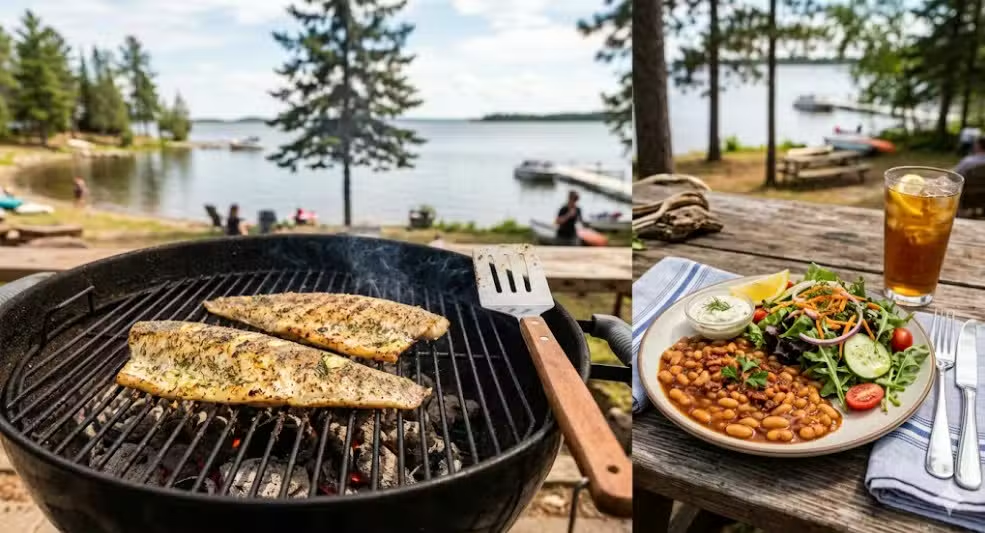
Spring and Summer is time to enjoy Lake of the Woods using your favorite grill. Catch those great walleyes, cook them over a grill for a mouth-watering treat, and create lasting memories with friends and family while savoring the flavors of grilled Lake of the Woods walleye, baked beans, and a side salad.

To begin, gather your fresh walleye fillets. Rinse them thoroughly under cold water and pat them dry with a paper towel. Proper seasoning is essential; consider using a mix of lemon juice, garlic, and fresh herbs like parsley or dill to enhance the natural flavors of the fish. Allow the fillets to marinate for about 30 minutes to infuse them with flavor.

Next, spray your grill grates with a non-stick grilling spray to prevent the fillets from sticking. Alternatively, you can use a paper towel soaked in oil and rub it over the grates using tongs. This method not only keeps the fish from sticking but also adds a subtle flavor.

Before grilling, preheat your grill to medium heat—around 375°F. This temperature is optimal for achieving that perfect grilled finish. Applying a non-stick spray or an oiled paper towel to the grates will help prevent the fillets from sticking and ensure they remain juicy.

Setting your grill to medium heat is crucial for achieving that perfect grilled texture. If your grill has a thermometer, aim for a temperature of about 375°F. A hot grill will sear the outside of the fillets while keeping the inside moist and flaky.

When it’s time to grill, carefully place the fillets on the grates. Cook them for approximately 6 minutes on each side, depending on the thickness of the fillets. It’s crucial to monitor them closely; the fish is ready to flip when it easily releases from the grill. A wide spatula can help you flip the fillets without tearing them.

Once the grill is preheated, place the fillets on the grill. They will only take about 6 minutes per side. Timing is essential; too long on the grill can dry them out. It’s best to keep an eye on them. You can tell they are ready to flip when they release easily from the grill. Use a wide spatula to flip them gently to prevent tearing.

As you grill the walleye, consider adding some vegetables to the mix. Slices of zucchini, bell peppers, and onions can be grilled alongside the fish, adding color and nutrition to your meal. Toss the veggies in olive oil, salt, and pepper before placing them on the grill.

Consider adding some colorful vegetables to your grilling session. Grilled zucchini, asparagus, or corn on the cob can elevate your meal. Simply toss them in olive oil and season with salt and pepper before placing them on the grill to cook alongside the walleye.

Once the fish is perfectly grilled, gently remove it from the grill and place it on a plate. Serve it with a generous helping of baked beans and your favorite side salad. The sweetness of the beans and the freshness of the salad balance out the savory flavors of the grilled fish.

Once cooked, carefully remove the walleye from the grill and let it rest for a moment. Serve it alongside a generous portion of baked beans and a vibrant side salad. The sweetness of the beans beautifully complements the savory fish, while the salad adds a refreshing crunch.

Now, take a moment to appreciate the beautiful outdoors as you enjoy this fantastic meal. The combination of flavors, the fresh air, and good company makes for a memorable dining experience.

As you enjoy your meal, take a moment to appreciate the stunning surroundings. The fresh air, delightful flavors, and shared laughter create a magical dining experience. Make it a tradition to grill outdoors each summer, cherishing the moments spent with loved ones.

grilled walleye lake of the woods side of beans and salad

Grilled Walleye with Sides: An Outdoor Culinary Delight

Grilled walleye lake of the woods baked beans side salad is more than just a meal; it’s a celebration of summer, family, and community. Each bite tells a story of outdoor adventures and culinary delights, making it a dish to remember.

Unforgettable Summer Fishing on Lake of the Woods

Kornovich family on a summer Lake of the Woods charter boat

Summer fishing on Lake of the Woods is very simply, unforgettable.  Whether you rely on the professionals at the resorts to lead your adventure on a charter boat or guide boat with a licensed charter captain, or your create your own adventure by fishing on your own, there are simply so many fish, a good number of big fish and so many good spots to fish.  Summer fishing on Lake of the Woods is special.

The Hot Jig Bite for Walleyes

Youtube video

During the summers months, walleyes and saugers, the most sought after fish, are in abundance.  Many are spread out over miles of mud flats on the main basin called Big Traverse Bay.  Early in the summer, the go to technique for many anglers is a jig and a minnow.

This isn’t rocket science for sure.  Basically, get out on part of the lake where the fish are living, anchor up and jig over the side of the boat.  The walleyes and saugers on these mud flats are roaming around looking for their next meal.  Things normally work out well for anglers.

Plan on catching a variety of sizes of walleyes and saugers.  Literally, catching walleyes so small you cannot believe they got the hook in their mouth along with a pile of eaters with the possibility of catching what many anglers come to Lake of the Woods for, a true giant walleye.  Sorting through fish to find your keepers for the fry pan is a true sign of a healthy fishery.

As they say, a picture says a thousand words.  The below video does a nice job of providing a glimpse of what it’s like summer fishing on Lake of the Woods.  This segment feature jigging!

Spinners and Crawlers... Hot for Summer Walleyes

Youtube video

Drifting or trolling spinners with nightcrawlers is one of the most time-tested and productive techniques as mid and late summer arrive on Lake of the Woods. As water temperatures climb and walleyes begin to scatter across flats, points, and mid-depth structure, spinners give anglers a versatile and highly effective way to track them down.

The spinner rig itself is a beautifully simple setup — a colorful blade mounted on a wire harness ahead of a hook or two threaded with a fresh nightcrawler. As the rig moves through the water, the blade rotates and sends out both flash and vibration, mimicking the look and feel of a small baitfish. Walleyes are notoriously sight-oriented predators, and that combination of movement, color, and sound is often all it takes to trigger a strike. The nightcrawler does the rest, offering the natural scent and texture that seals the deal on even the most reluctant fish.

What makes spinner fishing so appealing — especially for visiting anglers — is how approachable it is. Whether you’re slowly drifting across a windswept flat or running a methodical troll along a mid-lake reef, the technique is forgiving and easy to learn. You don’t need years of experience on the water to be effective. Set your spinner at the right depth, keep your speed in that sweet spot of about 1 to 1.5 mph, and let the rig do the work.

Speed and depth are your two main dials to adjust throughout the day. Blade size and color can also make a meaningful difference — brighter, flashier blades like chartreuse or orange tend to shine in stained or choppy water, while more natural gold and silver tones often shine on calm, clear days. Local bait shops around Baudette and throughout the Lake of the Woods area are a fantastic resource for dialing in what’s been working that week.

Because you’re constantly covering water while trolling or drifting, spinners allow you to efficiently search large areas of the lake until you locate actively feeding fish. Once you mark a productive stretch, you can make repeated passes and capitalize on the bite. For a vacation angler looking to maximize time on the water, few methods deliver as consistently — or as enjoyably — as a well-run spinner rig.

Trolling Crankbaits

Walleye, gold scatter rap, Lake of the Woods

Trolling crankbaits is another go-to technique that produces walleyes consistently throughout the summer season on Lake of the Woods — and it’s a method that adapts beautifully as fish movements shift from early summer through the dog days of August.

The fundamental rule of crankbait trolling is simple: put your lure where the fish are living. Sounds straightforward, but it’s the detail that separates a slow day from a cooler full of walleyes.

In early to mid-summer, fish are often found in shallower water — cruising shorelines, rock piles, and emerging weed edges in anywhere from 6 to 15 feet. During this phase, trolling crankbaits couldn’t be more accessible. Simply cast out behind the boat, set your rod in a holder, and motor along at a steady pace while covering water. The crankbait dives to its designed depth and works the zone where fish are actively feeding. It’s an incredibly effective and low-effort approach that even first-time visitors can execute successfully on day one.

As summer progresses and water temperatures peak, walleyes on Lake of the Woods push deeper — often suspending or hugging bottom in 18 to 30 feet of water or more. This is where having a few depth-control tools in your arsenal pays big dividends. A bottom bouncer — essentially a weighted wire rig that keeps your presentation ticking along the lake floor — paired with a 5- to 6-foot leader and a crankbait is one of the most reliable ways to run your lure right in the fish’s living room without constantly snagging bottom. The bouncer provides the weight and the crankbait provides the action, and together they cover the strike zone with precision.

Leadcore line is another excellent option for deeper trolling. By letting out a set number of “colors” — each 10-yard segment of leadcore sinks at a predictable rate — anglers can dial in their depth with surprising accuracy and repeatability. Once you find the right formula for a given speed and depth, you can duplicate it pass after pass. It’s a favorite among serious trollers on big-water lakes like Lake of the Woods.

For anglers looking for even more versatility, a three-way rig offers another reliable solution. A three-way swivel connects your main line to a dropper weight and a separate leader with the crankbait, keeping the lure running just above the bottom at whatever depth you choose. It’s a simple, highly adjustable setup that’s particularly effective when fish are tight to the bottom on deeper structure.

Regardless of which depth-control method you choose, a few crankbait fundamentals apply across the board. Speed matters — most walleye trollers find success in the 1.5 to 2.5 mph range, but don’t be afraid to experiment. Color selection can also be a difference-maker; natural perch and shiner patterns are reliable standbys, while brighter chartreuse and fire tiger colors often shine when skies are overcast or the water has a bit of color to it. Again, stopping into a local tackle shop when you arrive is always time well spent — the staff there fish these waters constantly and can point you toward exactly what’s been working.

Lake of the Woods is a massive body of water, and that size works in the visiting angler’s favor when it comes to crankbait trolling. There is no shortage of shoreline to cover, structure to work, or open-water flats to explore. Whether you’re running shallow casts along a rocky Canadian shoreline or methodically deep-trolling a mid-lake hump with leadcore, crankbaits give you the tools to stay in the game all summer long.

Make Life Easy... Jump in with a Guide or on a Charter Boat

Netting a walleye on a charter boat lake of the woods

Lake of the Woods is a massive, sprawling fishery — over a million acres of water stretching across the Minnesota-Ontario border, dotted with thousands of islands, bays, reefs, and channels. For a first-time visitor, or even a seasoned angler unfamiliar with the lake, figuring out where the walleyes are on any given day can feel like a daunting task. That’s exactly where a guide or charter boat becomes one of the best investments you can make in your vacation.

Climbing aboard a charter boat means you show up, enjoy the ride, and catch fish. It really is that simple. Charter boats on Lake of the Woods are large, stable, and purpose-built for comfort and safety on big water. These aren’t small aluminum tinnies — they’re serious vessels equipped to handle the open-lake conditions that can roll in quickly on a lake this size. A licensed charter captain is at the helm, handling everything from navigation to reading the water to running the gear. Your only job is to hold the rod and enjoy the experience.

One of the biggest advantages of fishing with a seasoned guide or charter captain is the network they operate within. When walleyes are on the move — which they frequently are as seasons and conditions shift — experienced captains are in constant contact with one another, sharing real-time information about where fish have been showing up, what depths they’re holding at, and what presentations are triggering bites. That kind of up-to-the-minute, boots-on-the-water intelligence simply isn’t available to someone pulling up to the lake cold. A good captain doesn’t just know where fish were last week — they know where they are today.

Booking a guide or charter is also easier than you might think. Most resorts and lodging properties throughout the Lake of the Woods area wither have their own guides or have established relationships with local guides and charter operations and can help arrange everything right from the front desk before you ever arrive. It’s one less thing to coordinate before your trip, and it means you’re likely getting a referral to someone the resort knows and trusts.

And the service doesn’t end when the lines come out of the water. Don’t know how to fillet a walleye, or simply don’t want to spend your vacation evening at the cleaning table? Not a problem — fish cleaning is part of the deal. Your guide takes care of it, and you walk away with a neat package of fresh walleye fillets ready for the pan. Better yet, many of the resorts in the area will cook your catch right in their own kitchen, turning the day’s harvest into a genuine shore-lunch or dinner experience. There’s nothing quite like sitting down to a meal of fresh walleye that was swimming in Lake of the Woods just hours before — it’s one of those memories that brings anglers back year after year.

Whether it’s your first time on the water or you simply want to maximize every hour of your trip, booking a guide or charter is quite possibly the smartest decision you can make. The lake does the rest.

Where to Stay

Angle Inn Lodge, NW Angle, Lake of the Woods MN

There are basically three areas to Lake of the Woods.  Some resorts are located on the Rainy River which is out international border with Canada and makes it’s way to Lake of the Woods.  The river is not only picturesque but also good fishing. 

The second area of the lake is the south shore overlooking big Lake of the Woods.  A beautiful area overlooking the walleye filled waters of Big Traverse Bay.

The third area is that little tip of Minnesota that sticks up into Canada called the NW Angle.

There are a variety of lodging options within each area.  Some like staying at a full service resort with charter boats, bar, restaurant and other nice amenities like pools, etc.  Some prefer cooking their own meals and staying in a smaller resort setting.  There are also very nice hotels and other rentals throughout the area.  This lodging page basically features them all.

The summer fishing is great, but there is so much more.  You are out amongst nature.  The air is fresh and there are a variety of birds and wildlife around.  It is common while fishing to see ducks, geese, seagulls, pelicans, loons, terns, herons, eagles and even a very rare piping plover on occasion.

Wildlife thrives in the area.  Deer, bears, and wolves are just a few of the large game living living in the area.  There is a wide variety of small game animals as well and while in the area, there is a good chance, you will see some.

This area is special.  There are about 4,000 people in all of Lake of the Woods County and not one stoplight!  This area is about outdoor recreation and the fishing is number one on the list for good reason.

If you want adventure and some of the best fishing anywhere, check out a summer fishing trip on Lake of the Woods.  Try it one time and you’ll be back!

Helpful information about the Lake of the Woods area

Lodging around the Lake of the Woods area

How to travel to Lake of the Woods

Lodging Availability Finder.  Enter desired dates, what part of the lake and hit Enter!

Open Water Fishing on Lake of the Woods & the Rainy River (Summer & Fall): FAQs

Open water fishing on Lake of the Woods and the Rainy River offers some of the most consistent and rewarding fishing in North America. From late spring through fall, anglers experience everything from easy, action-packed summer fishing to trophy opportunities in the fall.

Whether you’re fishing the expansive waters of Big Traverse Bay, the scenic Rainy River, or the island-rich Northwest Angle, this is a destination where both beginners and experienced anglers can succeed. With full-service resorts, experienced guides, and millions of fish, planning your trip is easier than you might think.

Open water fishing refers to the season when the lake is free of ice, typically from May through October. This includes both summer fishing and fall fishing, each offering different patterns, techniques, and opportunities for anglers.

Lake of the Woods is known for its abundant walleye population, consistent fishing success, and ability to produce quality fish throughout the open water season. Anglers regularly catch walleyes in high numbers, along with trophy-class fish, making it one of the most reliable walleye fisheries anywhere.

Fishing is excellent throughout the entire open water season:

  • Early Summer (May–June): Walleyes are often shallower and very active.
  • Mid-Summer (July–August): Fish spread out, often over deeper mud basins and structure.
  • Fall (September–October): Big walleyes feed aggressively, especially in the Rainy River and nearshore areas.

There is always a productive bite happening somewhere on the lake.

Lake of the Woods offers three distinct fishing areas:

  • South Shore / Big Traverse Bay – Known for open water walleye fishing, especially over deep mud flats.
  • Rainy River – A scenic and protected option, excellent in both summer and fall.
  • Northwest Angle (Lake of the Woods) – A remote area with thousands of islands, offering incredible structure fishing and multi-species opportunities.

Each area provides a different experience, and many anglers return to explore them all.

The Northwest Angle is the northernmost point of the contiguous United States and part of Lake of the Woods. Known for its rugged beauty and more than 14,000 islands, it offers outstanding fishing for walleyes, muskies, smallmouth bass, and northern pike. For anglers looking for a remote, scenic, and structure-rich experience, the Angle is hard to beat.

Yes. The Rainy River is excellent throughout the open water season. In the summer, it provides a calm, scenic alternative to the lake and is great for walleyes, bass, and pike. In the fall, it becomes a hotspot as walleyes follow emerald shiners into the river, creating outstanding opportunities for big fish.

Lake of the Woods and the Rainy River offer a wide variety of species:

  • Walleyes (primary target)
  • Saugers
  • Northern pike
  • Smallmouth bass
  • Crappies
  • Muskellunge (muskie)
  • Yellow perch

This diversity makes it ideal for both serious anglers and families looking for steady action.

No. Many resorts offer full-service fishing packages that include guided charter boats, equipment, bait, and fish cleaning. It’s an easy and stress-free way to experience the lake, especially for beginners or visitors traveling from out of town.

Absolutely. With high fish populations, simple and effective fishing techniques, and knowledgeable guides, Lake of the Woods is one of the most beginner-friendly fishing destinations anywhere.

Techniques vary throughout the season, but common methods include:

  • Spinner rigs with crawlers
  • Jigging with minnows or soft plastics
  • Trolling crankbaits to cover water

Guides and anglers adjust techniques based on fish location and seasonal patterns.

Depths vary depending on the time of year and location, but anglers commonly fish between 15 and 35 feet during the open water season. Fish may relate to mud flats, reefs, points, or shoreline structure depending on conditions.

If fishing with a guide or charter, you typically only need:

  • A valid Minnesota fishing license
  • Weather-appropriate clothing
  • Sunglasses, sunscreen, and a hat
  • Food and beverages

Most equipment and gear are provided.

Yes, within Minnesota fishing regulations. Many anglers enjoy a traditional shore lunch or bring fish back to their resort for a fresh fish fry—one of the highlights of a trip to Lake of the Woods.

Planning is simple. Start by selecting a resort that fits your style, whether you’re looking for a full-service experience, family-friendly lodging, or a remote getaway. Many resorts offer packages that include lodging, meals, and guided fishing. Booking early is recommended, especially for peak summer and fall dates.

From easy, action-filled summer fishing to trophy opportunities in the fall, Lake of the Woods and the Rainy River offer an experience that’s hard to match. With beautiful scenery, abundant fish, and full-service options, it’s a destination anglers return to year after year.

Lake of the Woods, MN… Best Fishing Anywhere

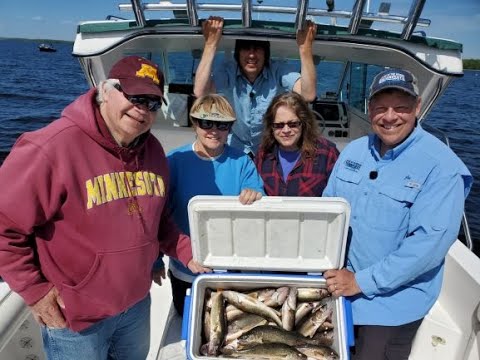
Joe Henry with a limit of Lake of the Woods walleyes and saugers

If you have never been to The Walleye Capital of the World or perhaps only ice fished it, the open water season offers an incredible experience.  It doesn’t matter if you are a rookie at fishing or very experienced, the resorts around the lake offer everything needed for everyone to have a fun and memorable day on the water.  It won’t take long to learn why many consider this area some of the best fishing anywhere.

Fish on a charter boat or with a guide.  Simply step aboard, everything is provided!

Youtube video

Anglers fishing Lake of the Woods are lucky because there are a number of great options for fishing on a charter boat or with a guide.  Especially the first time to the big water, some anglers who own their own boats even find it helpful to jump on-board a charter or with a guide the first time out to get a lay of the land.

When you step aboard, nearly everything is provided.  Rods, reels, tackle, bait, expertise in navigation and getting you on fish.  This make life easy as all  you need to do is dress for the weather, bring sunglasses and a camera to record the adventure.

A guide or charter boat makes it so nice.  Jump into a vehicle with a few others and drive up.  You can focus on each other rather than the weather, navigation and how to find the fish.

On the south end…  Charter boats for the most part are on the south end of the lake fishing the Rainy River and Big Traverse Bay which is the big water of Lake of the Woods.  When I say big water, I am talking about 25 miles north south by about 20 miles east west.  If Lake of the Woods was a great lake, it would be the sixth largest.  This can be intimidating and certainly requires a healthy respect.

The thing about the basin is it is loaded with millions of walleyes and saugers.  The basin also boasts a strong population of big trophy walleyes as there is a good number of tulibees in the big water.  Walleyes will focus on tulibees when they reach that 25 inch mark and these fish enable walleyes to get bigger faster.

Charter boat captains do a good job of sharing info with one another about fish movements, where there are active fish and other variables ultimately leading to a successful trip.  Most trips produce walleyes, it’s just a matter of how many and how big.

The basin reaches a maximum depth of about 38 feet deep.  This makes the entire body of water fair game for fishing.  This is one great big aquarium of life and a big part of Lake of the Woods.

Experience Minnesota's NW Angle

Northernmost Point Buoy, NW Angle, Northwest Angle, MN

It’s the northernmost point of the contiguous United States.  It is where the 14,552 islands of Lake of the Woods begin.  It is one of four exclaves between the United States and Canada, meaning, if you drive there, you actually have to drive about 40 miles through Canada and re-enter back into the U.S.

It is beautiful, is an absolute angler’s dream destination with fish around every corner, or in these parts, island and it is full of beauty.  Getting to this incredible part of Lake of the Woods is well worth the effort and there are a few way to get there.

  1.  Drive to the NW Angle
  2. Jump aboard a Lake of the Woods Passenger Service charter boat
  3. Boat across on your own (40+ miles across big open water)

The NW Angle is the northernmost point of the contiguous U.S., is where the 14,552 islands begin and boasts about 12 resorts, some on the mainland, some on islands.  The fishing is excellent for multi-species and the scenery and wildlife are even better.  Angle resorts have excellent guides that will fish in U.S. waters, Ontario waters or both, depending upon what you are targeting, etc.

Fishing guides typically run about a 20′ boat that can navigate to the best and most scenic fishing spots on both sides of the border.  If you like fish, most guides to a noon shore lunch that will mess up any fish fry you have at home ever again because they are so delicious and fresh.

Bring your own boat 

Matt and Nicole Stone, walleye fishing lake of the woods, MN and the Rainy River

For anglers who own their own boat and enjoy the challenge of new water, Lake of the Woods has so many good options.  Boat ramps are available on the Rainy River, south end of the lake and up at the Angle.  Some are public and resorts also offer nice boat ramps with sheltered marinas for a nominal fee.

Do you homework.  Check out Navionics or your GPS in your boat prior to coming  up.  Map chips have Lake of the Woods and the Rainy River mapped out in great detail.  This is helpful for both navigation and for finding productive areas to fish.

Get an idea of where you will be staying, launching and fishing.  It is nice to have a game plan.  Resorts and bait shops can be great resources for local info.

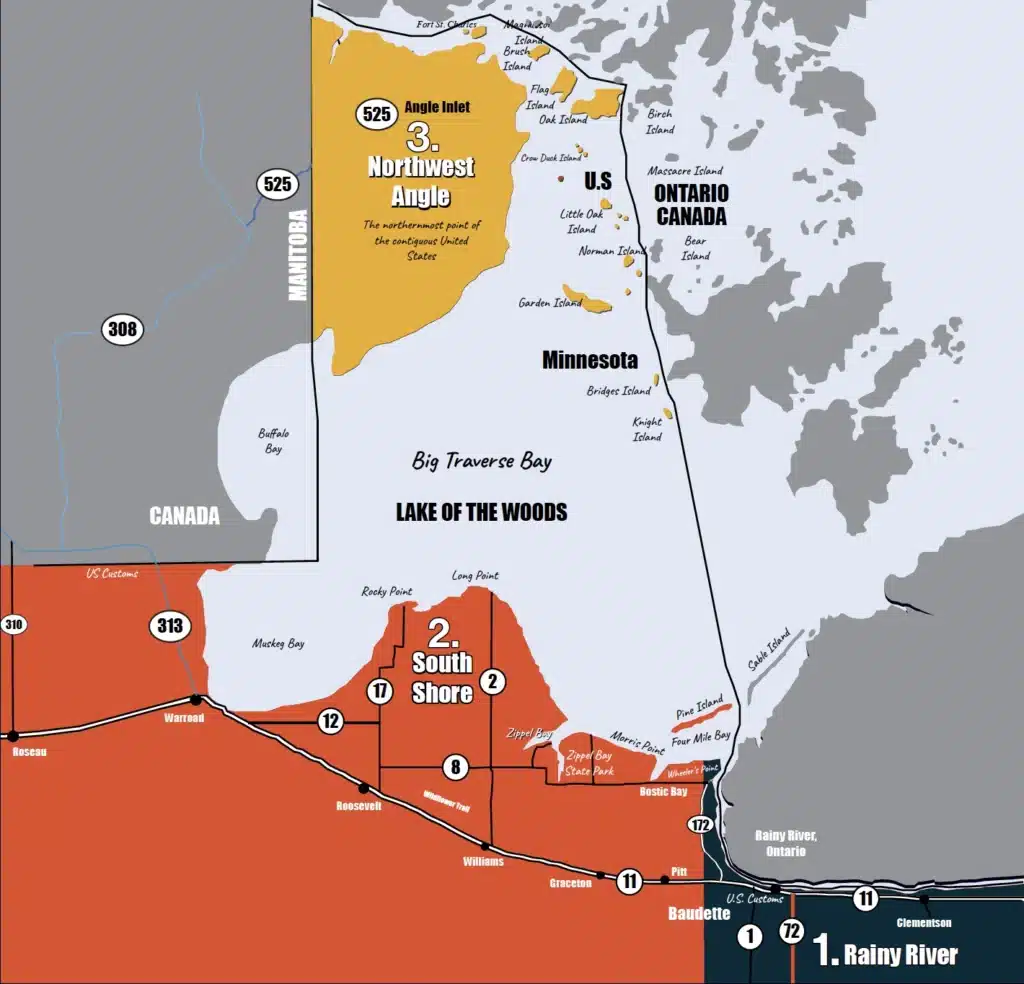
Three Areas of Lake of the Woods

Map of Lake of the Woods, Minnesota

There are basically three areas of Lake of the Woods, all of which offer some world class fishing.

First is the Rainy River which feeds the lake.  This all by itself can be a wonderful fishery with walleyes, lake sturgeon and pike.  There are 42 miles of navigable river from the mouth of the river at Wheeler’s Point all the way to Birchdale, MN which is 26 miles east of the small northern MN town of Baudette.

The second part of Lake of the Woods is Big Traverse Bay.  This is the big open water of the lake spanning 30+ miles north/south by 25 miles east/west.  A big body of water with it’s deepest area only 38 feet deep.  This is like one big aquarium full of a variety of fish.

The third area of Lake of the Woods is the Northwest Angle.  The “Angle” is on the very northern tip of Minnesota and is actually the northernmost point of the contiguous United States.  This is where the 14,552 islands of the lake begin.  This area is surrounded by Canada, with Manitoba to the west and Ontario to the north and east.

Fresh Walleye Fish Fry

Fish fry, River Bend Resort, Lake of the Woods

Nestled in the far northern corner of Minnesota, Lake of the Woods has rightfully earned its title as the Walleye Capital of the World — and one taste of a fresh-caught walleye will tell you exactly why. The lake’s vast, cold waters produce some of the finest walleye fishing anywhere on the planet, yielding fish with the mild, delicate flavor and tender white, flaky meat that has made walleye a prized delicacy among anglers and food lovers alike.


The experience doesn’t end when the lines come in. Many local fishing guides carry on the beloved tradition of the shore lunch — pulling up to a scenic shoreline to fillet and fry your morning catch right on the spot, with nothing but open sky overhead and the smell of sizzling fish in the fresh northern air. For those who prefer to head back to home base, most area resorts are more than happy to take your fresh catch and prepare it to perfection, turning a great day on the water into an unforgettable meal at the table.


Whether shore-side or resort-side, a fresh walleye fish fry at Lake of the Woods is more than just dinner — it’s a tradition.

Great Places to Stay

Log cabin at Zippel Bay Resort, lodging Lake of the Woods, MN

Resorts, hotels and cabins to stay and fish at are all around the area.  Stay right on the Rainy River, or maybe in the small northern MN town of Baudette, along the south shore of the big lake or maybe up north at the NW Angle.

There are a number of full service resorts offering full service fishing on a charter boat, guided fishing, rental boats, restaurants and cool little taverns.  At the same time, there are the small resorts where a person can get away from the crowds, make their own meals and do their own thing.  Something for everyone.

Regarding where to stay, Lake of the Woods Tourism has a complete list of lodging options on all sides of the lake.  There are Ma and Pa resorts to brand name hotels, small to large, self service where you make your own meals to full service with full restaurant and bar.  Lots of options on where to stay.

To learn more about Lake of the Woods, check out the Lake of the Woods Tourism website.

To find lodging, a fishing guide or charter boat, check out our lodging page.

Directions to Lake of the Woods

Lodging Availability Finder.  Enter desired dates, what part of the lake and hit Enter!

Open Water Fishing on Lake of the Woods & the Rainy River (Summer & Fall): FAQs

Open water fishing on Lake of the Woods and the Rainy River offers some of the most consistent and rewarding fishing in North America. From late spring through fall, anglers experience everything from easy, action-packed summer fishing to trophy opportunities in the fall.

Whether you’re fishing the expansive waters of Big Traverse Bay, the scenic Rainy River, or the island-rich Northwest Angle, this is a destination where both beginners and experienced anglers can succeed. With full-service resorts, experienced guides, and millions of fish, planning your trip is easier than you might think.

Open water fishing refers to the season when the lake is free of ice, typically from May through October. This includes both summer fishing and fall fishing, each offering different patterns, techniques, and opportunities for anglers.

Lake of the Woods is known for its abundant walleye population, consistent fishing success, and ability to produce quality fish throughout the open water season. Anglers regularly catch walleyes in high numbers, along with trophy-class fish, making it one of the most reliable walleye fisheries anywhere.

Fishing is excellent throughout the entire open water season:

  • Early Summer (May–June): Walleyes are often shallower and very active.
  • Mid-Summer (July–August): Fish spread out, often over deeper mud basins and structure.
  • Fall (September–October): Big walleyes feed aggressively, especially in the Rainy River and nearshore areas.

There is always a productive bite happening somewhere on the lake.

Lake of the Woods offers three distinct fishing areas:

  • South Shore / Big Traverse Bay – Known for open water walleye fishing, especially over deep mud flats.
  • Rainy River – A scenic and protected option, excellent in both summer and fall.
  • Northwest Angle (Lake of the Woods) – A remote area with thousands of islands, offering incredible structure fishing and multi-species opportunities.

Each area provides a different experience, and many anglers return to explore them all.

The Northwest Angle is the northernmost point of the contiguous United States and part of Lake of the Woods. Known for its rugged beauty and more than 14,000 islands, it offers outstanding fishing for walleyes, muskies, smallmouth bass, and northern pike. For anglers looking for a remote, scenic, and structure-rich experience, the Angle is hard to beat.

Yes. The Rainy River is excellent throughout the open water season. In the summer, it provides a calm, scenic alternative to the lake and is great for walleyes, bass, and pike. In the fall, it becomes a hotspot as walleyes follow emerald shiners into the river, creating outstanding opportunities for big fish.

Lake of the Woods and the Rainy River offer a wide variety of species:

  • Walleyes (primary target)
  • Saugers
  • Northern pike
  • Smallmouth bass
  • Crappies
  • Muskellunge (muskie)
  • Yellow perch

This diversity makes it ideal for both serious anglers and families looking for steady action.

No. Many resorts offer full-service fishing packages that include guided charter boats, equipment, bait, and fish cleaning. It’s an easy and stress-free way to experience the lake, especially for beginners or visitors traveling from out of town.

Absolutely. With high fish populations, simple and effective fishing techniques, and knowledgeable guides, Lake of the Woods is one of the most beginner-friendly fishing destinations anywhere.

Techniques vary throughout the season, but common methods include:

  • Spinner rigs with crawlers
  • Jigging with minnows or soft plastics
  • Trolling crankbaits to cover water

Guides and anglers adjust techniques based on fish location and seasonal patterns.

Depths vary depending on the time of year and location, but anglers commonly fish between 15 and 35 feet during the open water season. Fish may relate to mud flats, reefs, points, or shoreline structure depending on conditions.

If fishing with a guide or charter, you typically only need:

  • A valid Minnesota fishing license
  • Weather-appropriate clothing
  • Sunglasses, sunscreen, and a hat
  • Food and beverages

Most equipment and gear are provided.

Yes, within Minnesota fishing regulations. Many anglers enjoy a traditional shore lunch or bring fish back to their resort for a fresh fish fry—one of the highlights of a trip to Lake of the Woods.

Planning is simple. Start by selecting a resort that fits your style, whether you’re looking for a full-service experience, family-friendly lodging, or a remote getaway. Many resorts offer packages that include lodging, meals, and guided fishing. Booking early is recommended, especially for peak summer and fall dates.

From easy, action-filled summer fishing to trophy opportunities in the fall, Lake of the Woods and the Rainy River offer an experience that’s hard to match. With beautiful scenery, abundant fish, and full-service options, it’s a destination anglers return to year after year.
Fresh Walleye Dinner

fresh walleye dinner fried potatoes pork and beans lake of the woods

Walleye season has begun on Lake of the Woods and its time to celebrate the best tasting fish that there is. This fish can be prepared many ways but this tradition method is the very favorite.

Prepare walleye fillets

Dry the fillets.

Place canola or vegetable oil in a fry pan. Heat to 350 degrees.
Add some butter for additional flavor and browning.

Dip the fillets in a floured batter with seasonings
Seasonings include: salt, pepper, lemon pepper, paprika,
season salt, onion powder and cajun seasoning if you like.
Add baking powder to get a crisp finish to the fillet.

Fry fish on both sides. About 4 minutes on the side or until
a light brown color.

Place in a dish lined with a paper towel to absorb oil. fresh walleye dinner fried potatoes pork and beans lake of the woods

Serve with your favorite tartar sauce.

Your meal could include fried potatoes, pork and beans
and a side salad with a dinner roll and a beverage of your
choice. Enjoy!